For hotels
What your desk knows, in every room.
The concierge answer, the one about the good restaurant two streets back, does not scale past the people standing at the desk. A guide does: one for the whole house, behind the same code in every room, in the guest’s language, carrying your brand and nobody else’s.


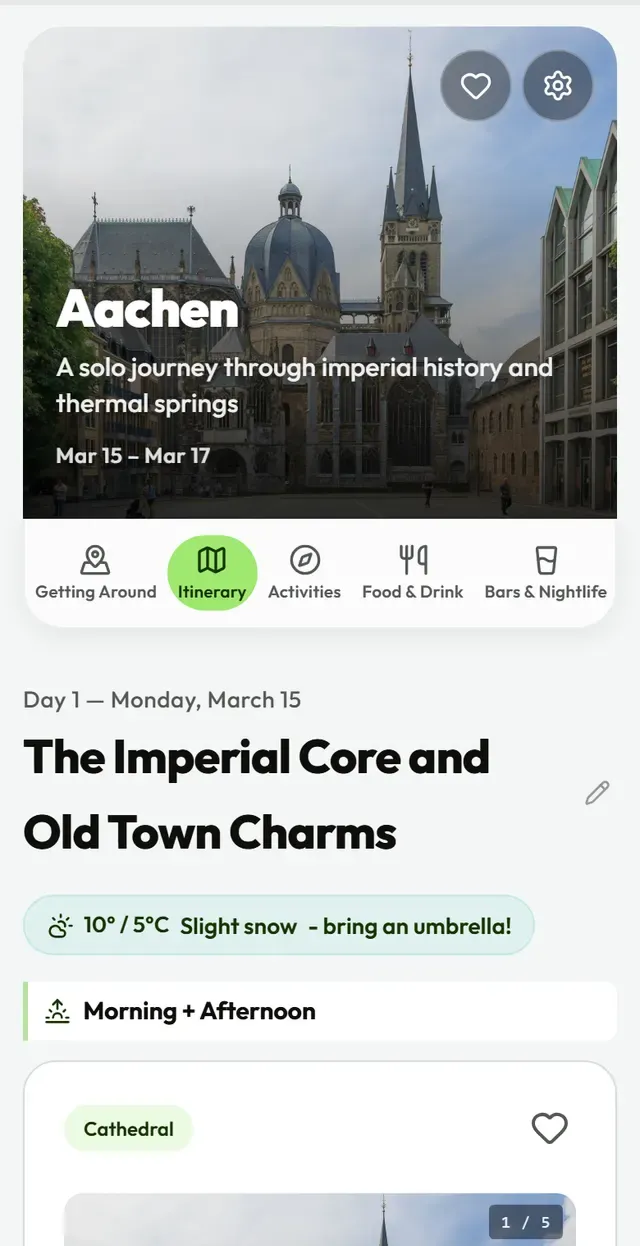
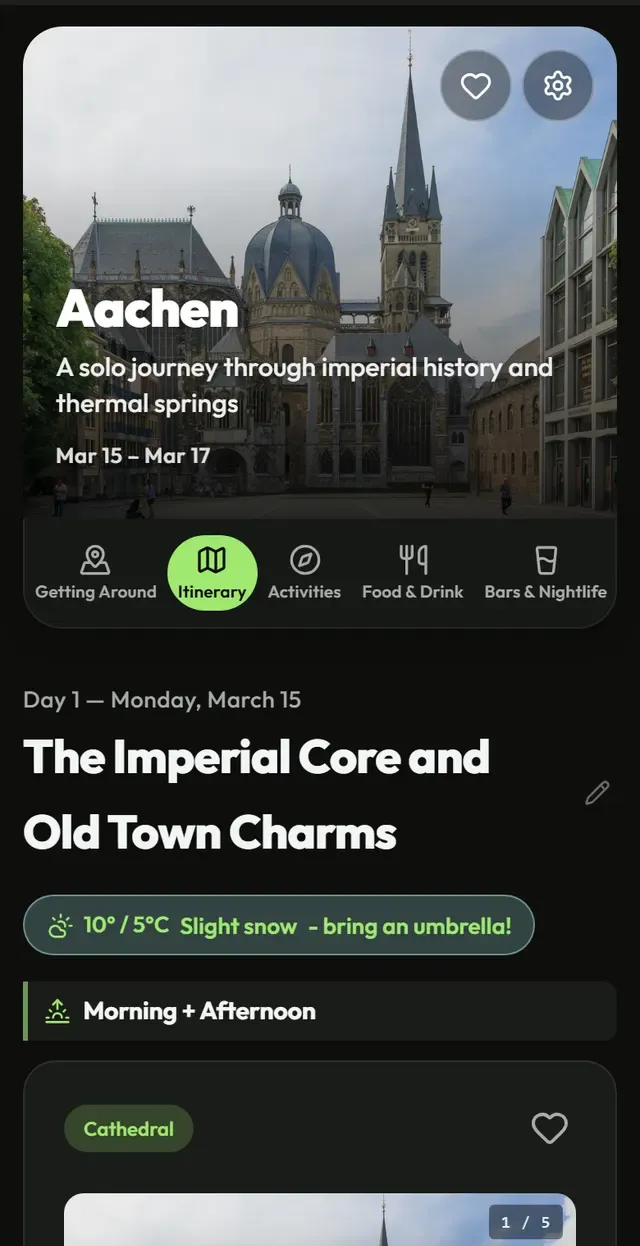
A hotel already gives guests something on arrival — a printed map, a card of recommendations, a PDF nobody opens twice. It ages, it is in one language, and it says nothing about the street it is handed out on.
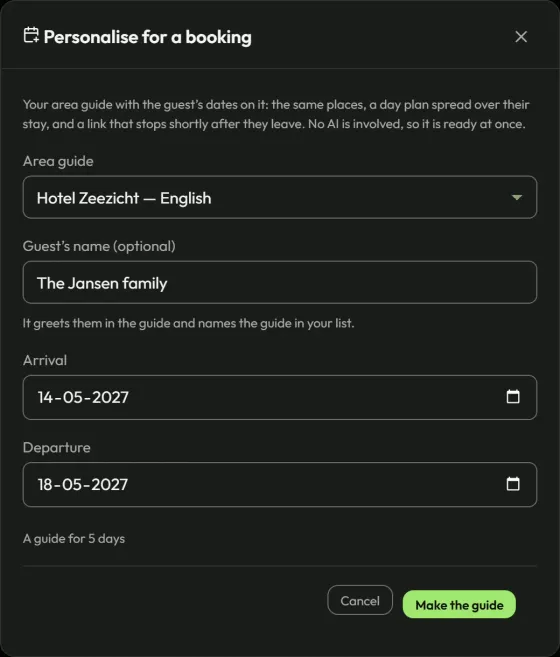
This replaces it with one guide on their phone: the area around the hotel, in the guest’s language, with your name on it, and it keeps working in the metro. The desk has nothing to do for it — the code is already in the room. And if a guest wants a day plan for their own stay, a colleague makes one in seconds.
What your hotel gets
One guide for the whole hotel, in your brand
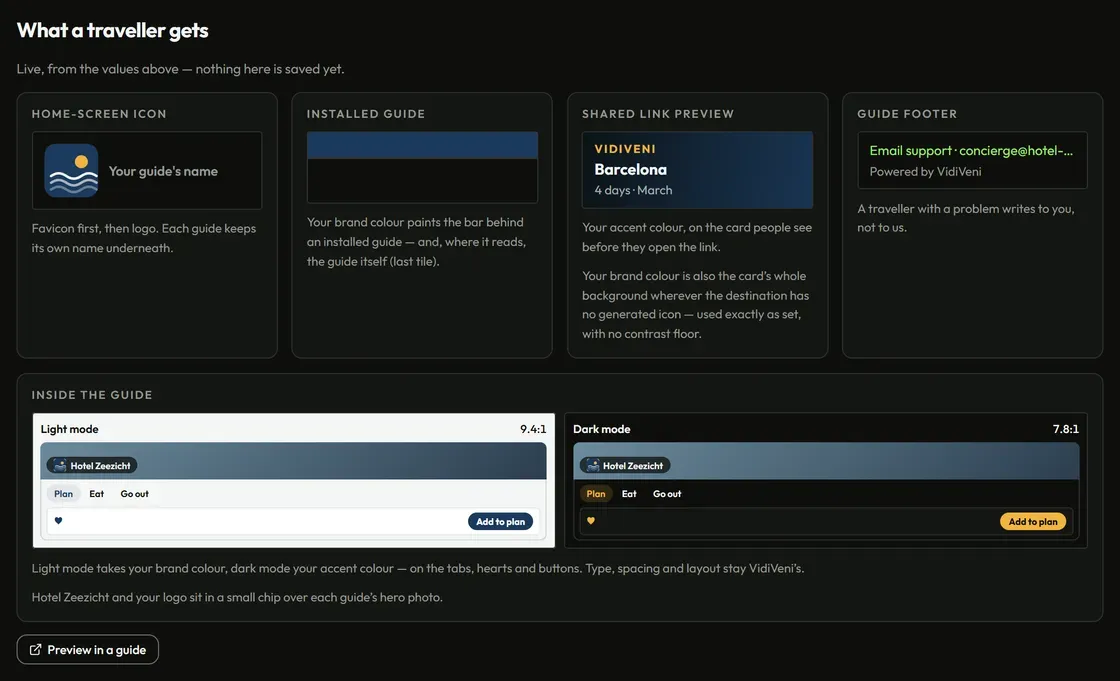
The area around the hotel, with your welcome at the top; every place from our catalogue has a photograph, a spot on the map and a practical tip. Logo, favicon, your two colours and the support address guests write to are set once, and the “Powered by VidiVeni” line comes off on request. Run more than one hotel and each gets a guide of its own.
The same QR code in every room
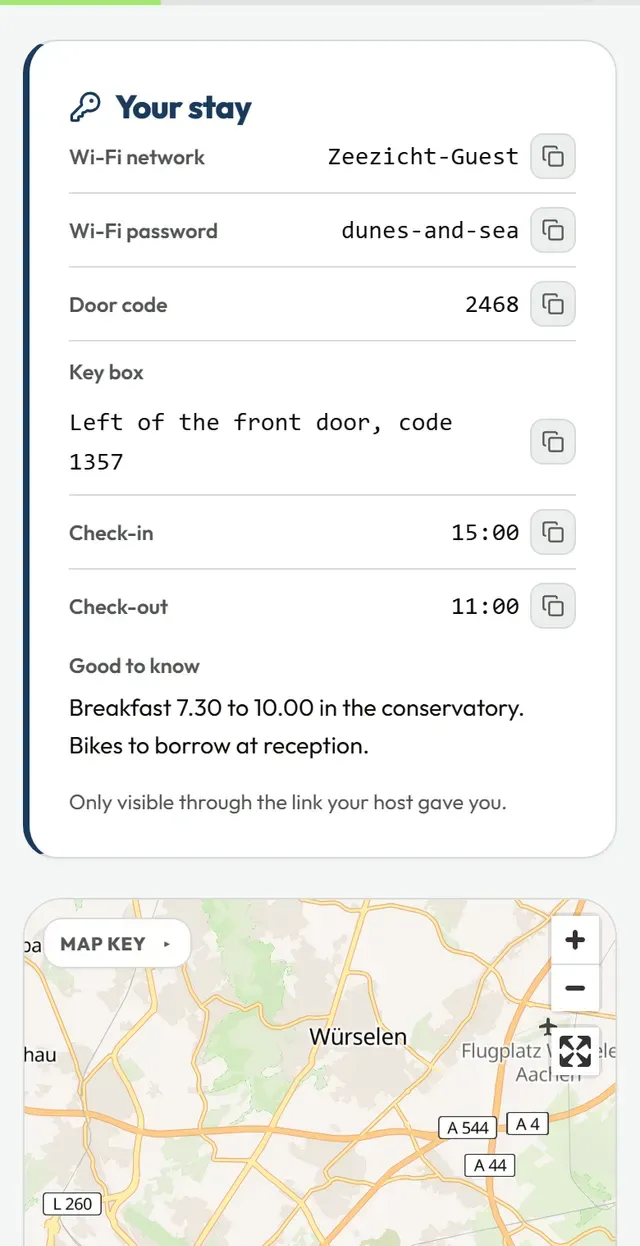
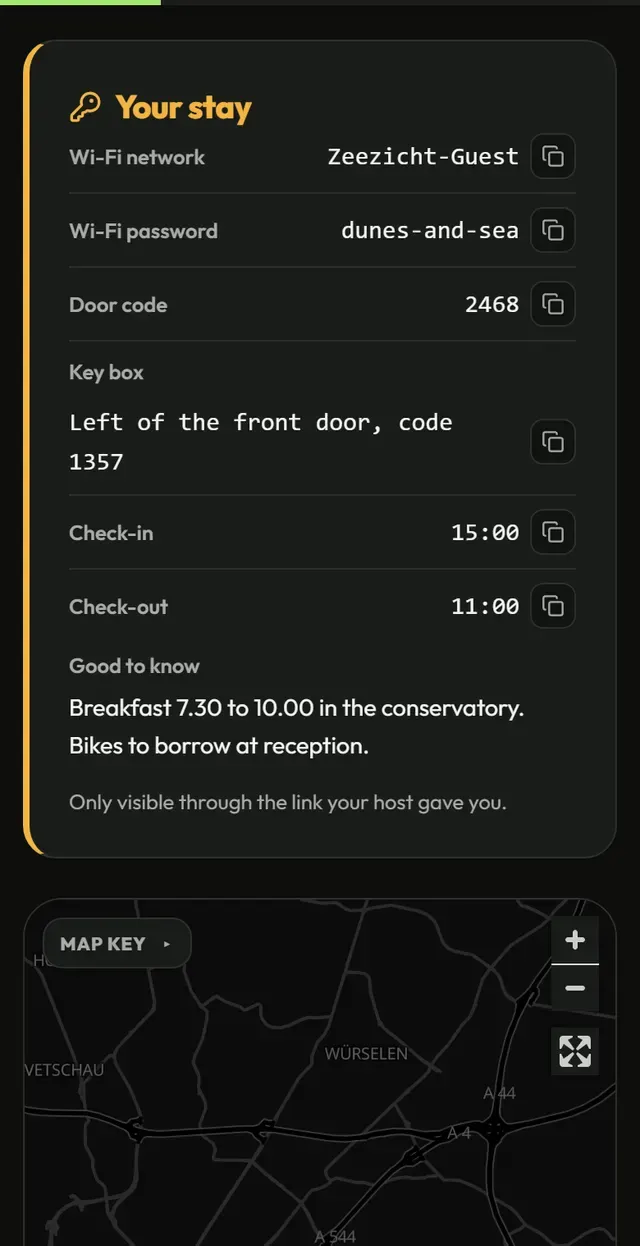
A guest scans it and the guide opens in the language they choose, with what only guests should see behind it: the wifi, the door code, the check-in and check-out times. The ordinary share link and the public page never show any of it. You print the code for the door, the desk or the welcome folder, and when a language is added there is nothing to reprint.
Your favourites, in the guide and on your page
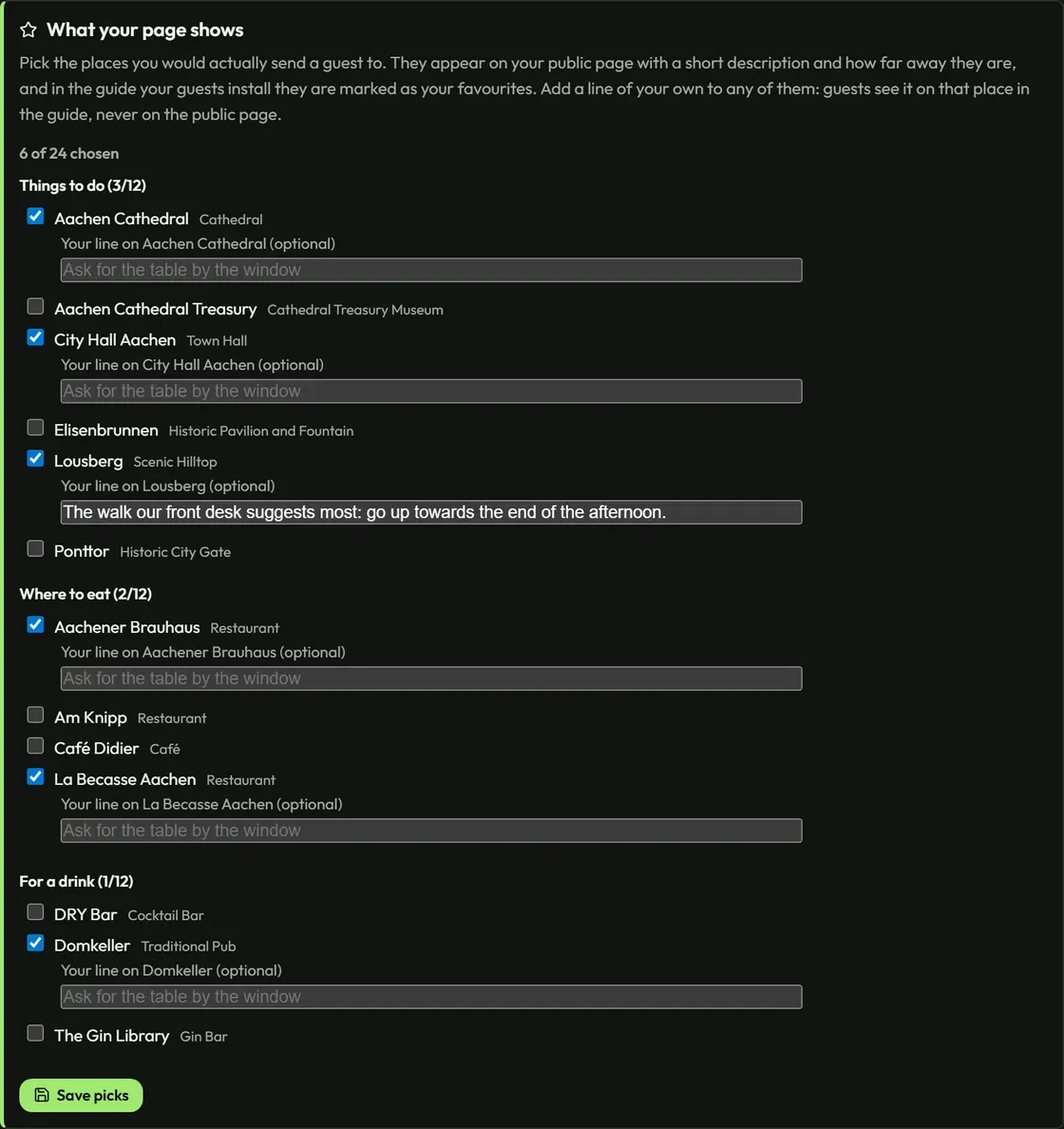
From our catalogue you pick the places the desk sends guests to itself; their photographs make the cover of the guide. In the guide they carry the label “Our favourite”, with a line of your own if you like. A place the desk would not send anyone to, you take out. The hotel also gets a public page of its own with your welcome, the favourites with, where we know it precisely, the distance from the front door, and, if you like, links to the hotel’s website, its booking page and its listing on a map. Search engines find it only once you want them to and we have checked it.
Colleagues with their own logins
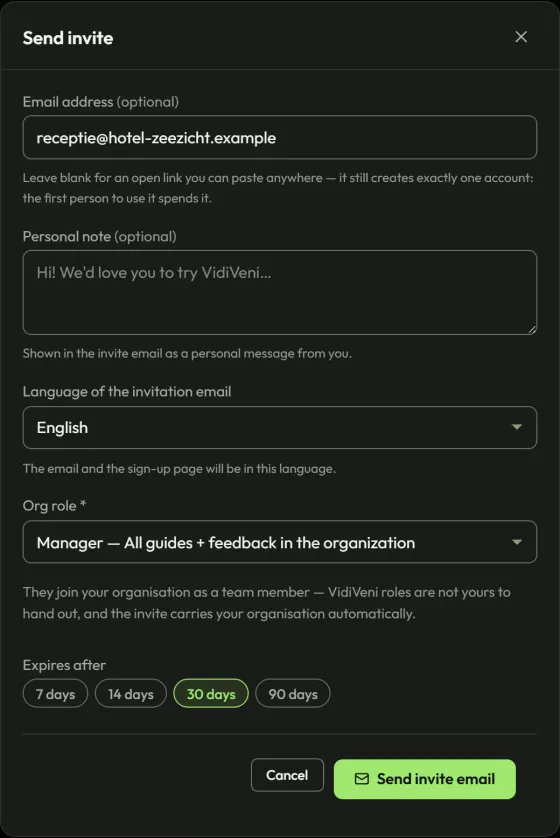
Invite your colleagues yourself and decide per person what they may do: make their own guides, or manage every guide and guest message. Managers and owners see every guide the hotel has made, and can withdraw one the moment it should stop working. Each colleague picks the dashboard’s language for themselves: Dutch, English, French, German or Spanish.
What guests write comes to you
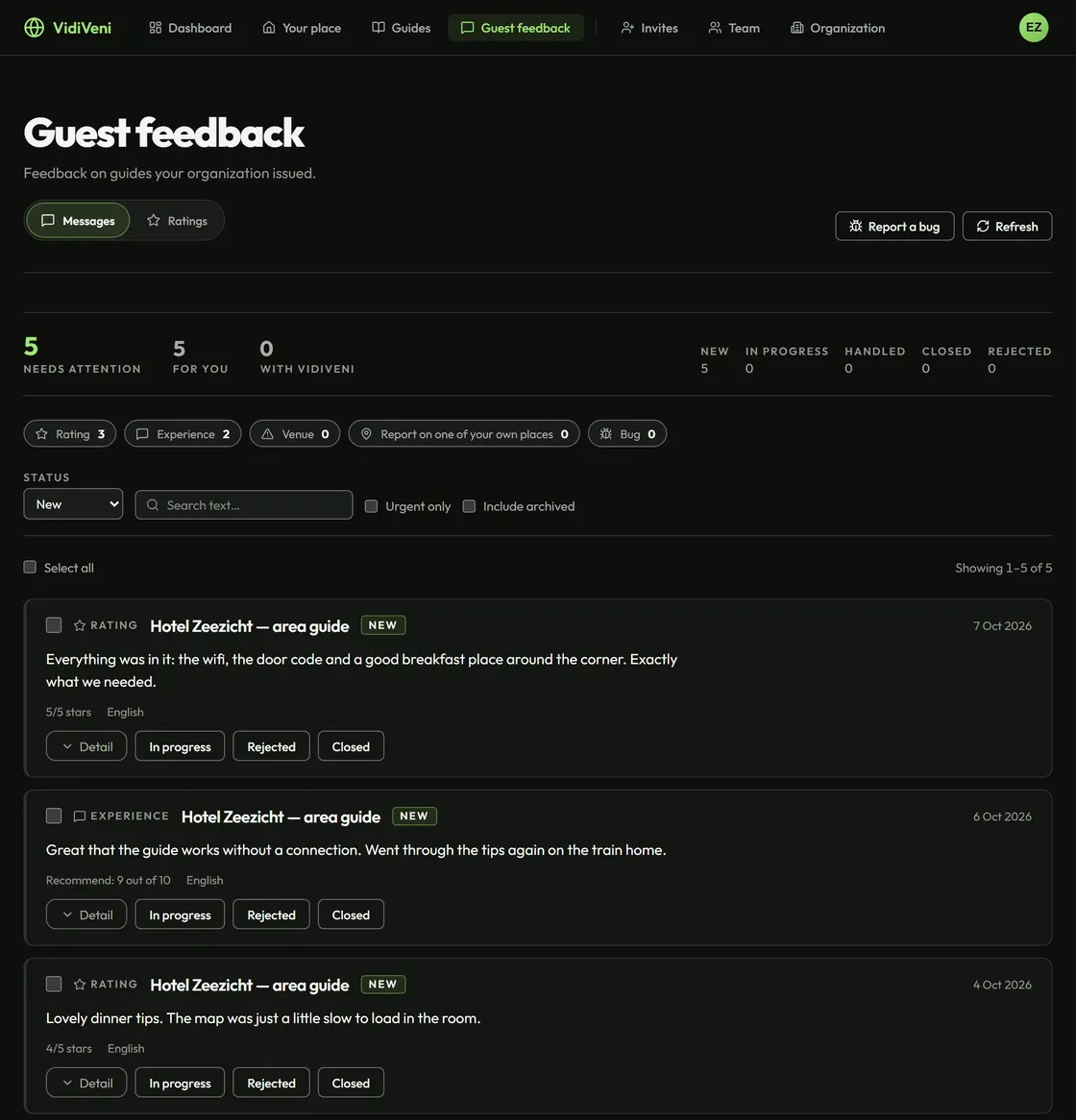
What guests write about the hotel’s guides and how they rate them is in your dashboard, and you can reply. An area guide asks for a rating once, from the guest’s second day with it; a guide for a booking asks on its last day. You also see how often the hotel’s area guide was opened in the last thirty days and when it was last opened.
And for one booking, a guide of its own
When a guest wants a day plan for their own stay, the desk makes one in seconds: pick the area guide in the guest’s language, enter arrival and departure and, if you like, their name. It carries the hotel’s branding, has a link of its own and stops working shortly after the stay. How many of those you can hold at once is set to the size of your hotel.
What it cannot do yet
Worth knowing before you start:
- Your own web address. Your guide lives at a vidiveni.app address. You cannot connect a custom domain of your own yet, such as guide.yourhotel.com.
- What your own places do not have yet. Your own places now have a photo if you add one, a check on whether their website still answers and, if you want, a spot on your own page that anyone can find. Two things are still missing: we do not check whether such a place is still open — what guests report about one comes to you — and on that page it shows without its address, link or photo.
- Picking a plan yourself. There is no checkout. We agree your plan together and set it up for you; to change it, you send us a message.
- A connection to your booking system. There is no API yet, so your booking system cannot make guides on its own. You make a guide for a booking in the dashboard, in one step.
All of it is on the roadmap. If you need one of them, tell us — what hosts ask for most gets built first.
Getting started
Bring the person who works the desk.
Ask for a demo. We have a guide for your address ready beforehand, and on the call the colleague who will use it makes the first guide for a booking.
Request a demo